Utility Lines Installed at the Right Depth
Trenching in Paducah for utility installations, drainage systems, and underground infrastructure
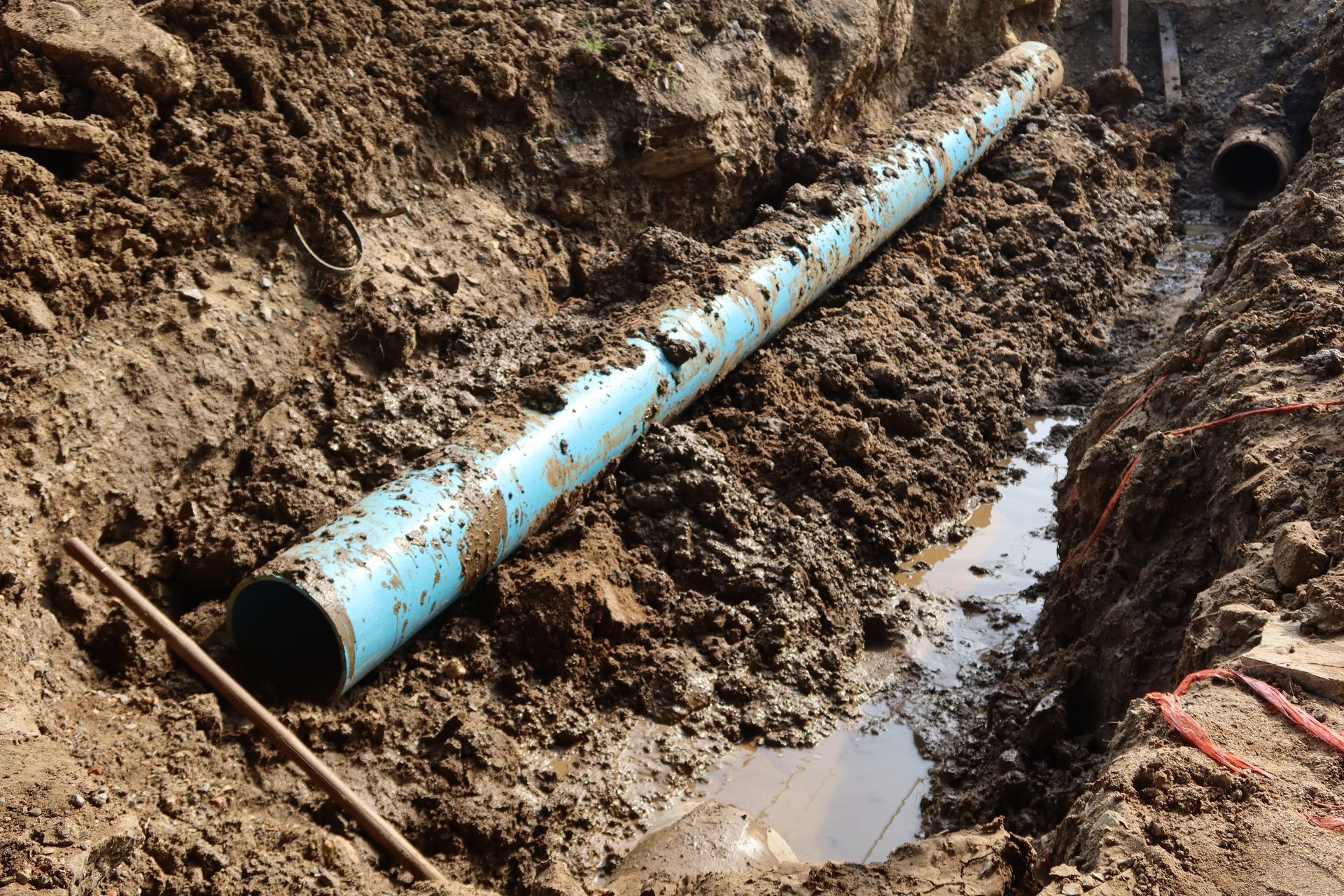
Black Line Excavation handles trenching for utility lines, drainage, and underground installations using laser-guided equipment that maintains proper depth and grade throughout the dig. The high water table near Kentucky Lake and the Tennessee River changes how trenching work gets done, requiring dewatering and careful bedding to keep lines stable. GPS guidance tracks exact positioning while laser systems control depth, which matters when you're burying lines that need to stay at specific grades for decades.
Trenching involves more than just digging a straight line—the trench must maintain proper slope for drainage or utility function, and backfill compaction determines whether the ground settles later. In areas with high water tables, dewatering equipment removes groundwater during the dig, and proper bedding material around pipes prevents shifting as soil conditions change seasonally.
Request a site evaluation to determine trench depth requirements and bedding specifications for your utility project.
How Precision Equipment Prevents Settling and Utility Damage
Laser-guided trenching equipment cuts to exact depth specifications and maintains consistent grade across the entire run, which prevents low spots where water collects or high points that stress pipe joints. GPS tracking records trench location for future reference, and the equipment adjusts cutting depth automatically as ground elevation changes. This removes the guesswork from grade work and ensures utility lines sit where engineers specify.
After installation, you'll see level ground where the trench was dug, with no sinking or washouts developing over the following months. Proper backfill compaction in layers prevents the settling that causes driveways to crack or pavement to sag above buried lines. The trench route gets documented with GPS coordinates, so future work near those lines doesn't require guessing where utilities run.
Black Line Excavation includes proper bedding material around pipes and structured backfill that compacts uniformly, which matters more in clay soils that shift with moisture changes. The work also accounts for drainage requirements separate from the utility line itself—trench backfill uses material that doesn't channel water along the pipe route.
What Property Owners Ask About Trenching
Questions about trenching often focus on how the work affects existing conditions and what happens after backfilling.
What depth do utility trenches require?
Depth depends on the utility type and local code—water lines typically run below frost depth, electrical conduit follows NEC specifications, and drainage lines sit at grades calculated for flow velocity. Laser guidance maintains those depths accurately across uneven terrain.
How does trenching work near the high water table in Paducah?
Dewatering pumps remove groundwater during excavation, and the trench gets bedded with gravel or sand that drains better than native clay. This keeps water from refilling the trench and destabilizing pipe bedding before backfill compaction happens.
What prevents trenches from settling after they're filled?
Backfill compaction in six-inch lifts removes air pockets and creates uniform density. Proper compaction takes more time than just pushing soil back into the trench, but it's what keeps pavement and driveways from sinking later.
Why does trench backfill use different material than what was removed?
Clay soil removed during digging doesn't compact reliably around pipes without creating pressure points. Engineered backfill like crushed stone or select fill compacts uniformly and drains water away from the utility line.
How do you locate the trench route for future reference?
GPS equipment records trench coordinates during excavation, and those locations get documented for property records. This prevents accidental utility strikes during future digging projects and helps locate lines for repair work years later.
Black Line Excavation provides free quotes for trenching projects and operates with the equipment and licensing needed for compliant utility installation. Call (270) 816-0206 to schedule an evaluation of your site conditions and discuss trench specifications.