Ground That Drains Instead of Flooding
Grading and leveling in Paducah for drainage correction, construction preparation, and site development
Standing water in low spots, runoff flowing toward foundations, and uneven yards all trace back to grade problems that precision equipment solves. Black Line Excavation uses GPS-controlled grading equipment to establish proper slopes and eliminate the drainage issues that come from eyeballing grade work. Western Kentucky clay soil expands when wet and contracts when dry, which makes accurate initial grading critical—once clay settles into the wrong shape, fixing it later costs more than doing it right the first time.
Grading work establishes the slope and elevation across a site, directing water away from structures and toward drainage points. GPS systems guide blade height to match engineered specifications, and the equipment adjusts continuously as it moves across uneven ground. Clay soil requires different compaction approaches than sandy or loamy soils, and seasonal moisture changes affect how that soil behaves after grading.
Schedule a site assessment to identify drainage patterns and determine grading requirements for your property.
What Proper Slopes Accomplish for Long-Term Drainage
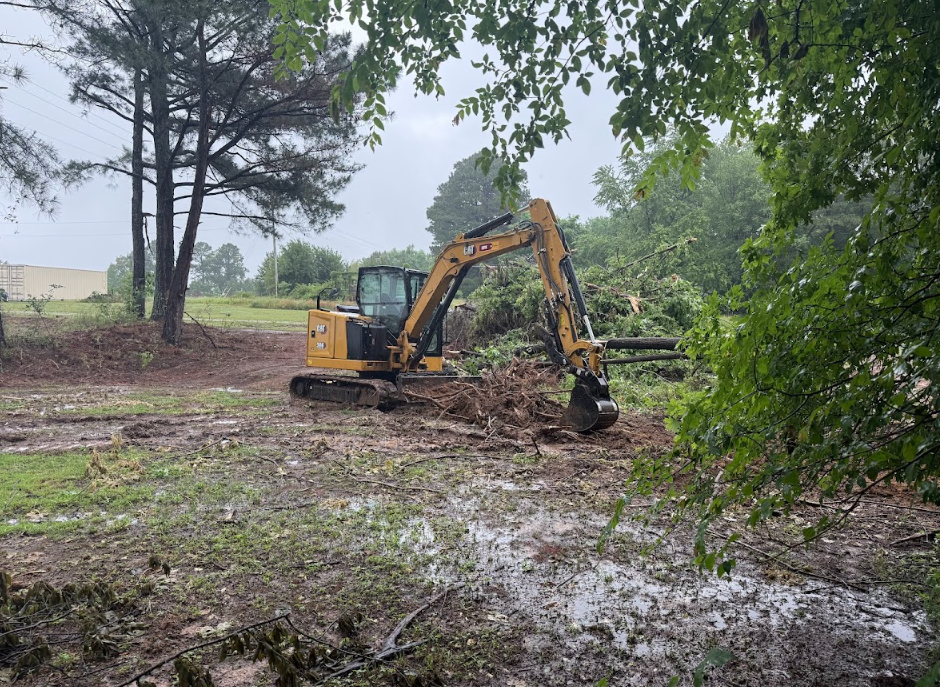
GPS-controlled grading creates slopes calculated to move water at velocities that prevent erosion while avoiding flat spots where puddles form. The equipment maintains grade to within a tenth of a foot across large areas, which matters when you're preparing a foundation pad or correcting yard drainage. In Western Kentucky, clay drainage patterns differ from region to region based on soil composition, and grading must account for how quickly that specific clay sheds water versus absorbing it.
Once grading work finishes, you'll notice water moving off the property during rainstorms rather than pooling near buildings or creating muddy low areas. Driveways drain to the street, yard slopes carry runoff to designed collection points, and foundation perimeters stay dry because water flows away instead of soaking into backfill. These changes show up immediately after the first significant rain and continue working as long as the grade remains intact.
The work also prepares sites for construction by creating level pads at specified elevations and establishing access routes that handle equipment weight. Finish grading smooths surfaces for landscaping or paving, and rough grading shapes larger terrain features like berms or drainage swales.
Common Questions About Site Grading
Grading questions typically address how the work solves specific drainage problems and what results property owners should expect.
What slope does proper grading require?
Residential grading typically needs at least two percent slope away from structures—that's a quarter-inch drop per foot of distance. Steeper slopes work for swales and ditches, while flatter areas require careful shaping to avoid standing water without causing erosion.
How does GPS equipment improve grading accuracy?
GPS-controlled systems reference elevation models and adjust blade height automatically, removing human error from grade work. The equipment maintains consistent slopes across acres of land and records final elevations for construction or compliance documentation.
Why do clay soils in Paducah require specific grading approaches?
Clay expands when saturated and shrinks when dry, creating movement that affects drainage patterns. Grading must account for this behavior by establishing slopes that function even as the soil shifts seasonally, and compaction techniques differ from those used on sandy or gravelly soils.
What changes after grading corrects drainage problems?
Water stops pooling in low spots, soggy areas dry out between rain events, and foundations stay drier because runoff moves away from the building. You'll also notice less erosion in areas where water previously rushed across uncontrolled slopes.
How long does grading work take for typical residential projects?
Duration depends on site size and complexity—correcting drainage around a single home might take one day, while preparing a construction site or regrading several acres requires more time. Weather affects clay grading work since wet conditions create compaction problems.
Black Line Excavation operates licensed and insured with equipment designed for accurate grade control. For a free quote on your grading project, call (270) 816-0206 to discuss site conditions and drainage goals.